AI SOCIAL · Interactive prototype
QQ Lingxi
QQ already has people, groups, and content. The missing piece is understanding you well enough to find connections that truly fit.
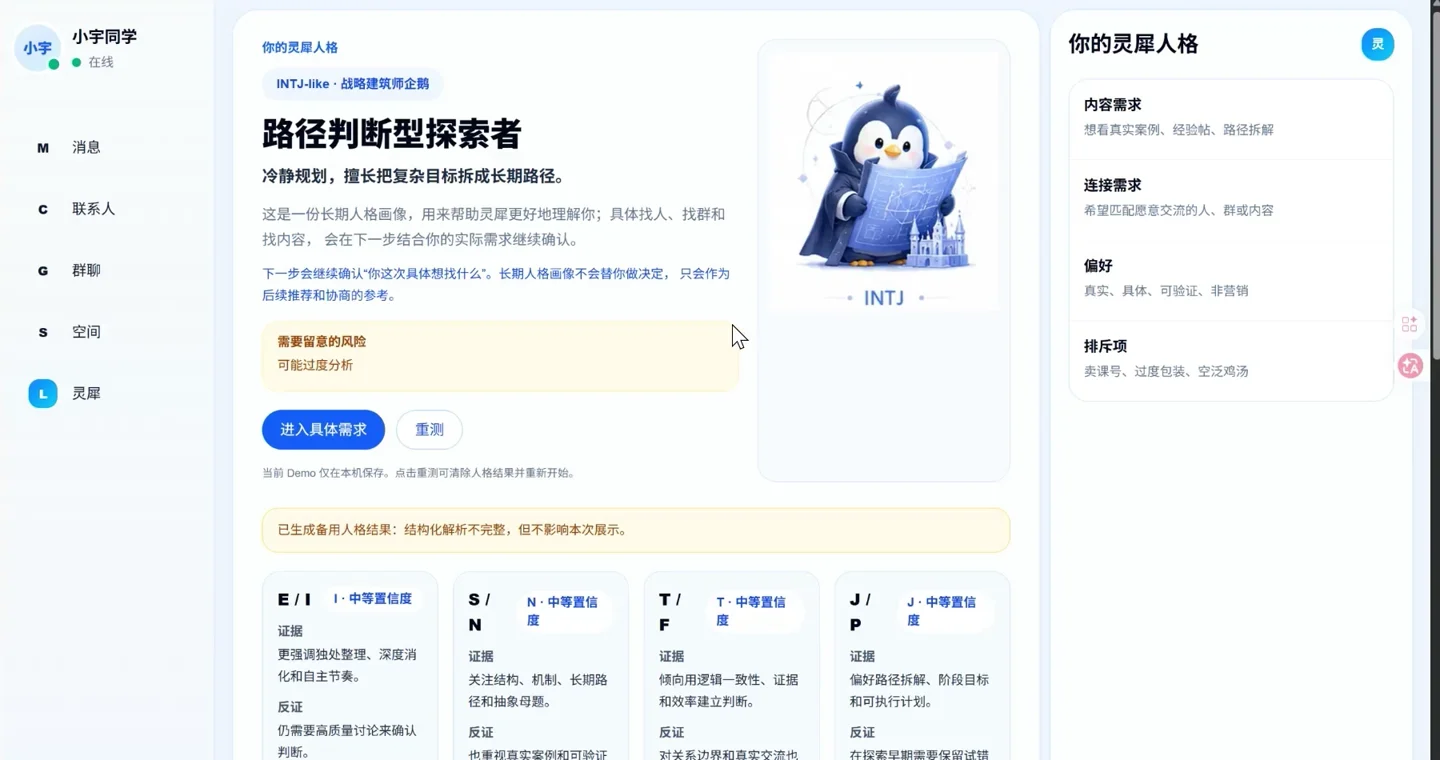
Separate who you are from what you need right now
Custom follow-up questions in QQ-MBTI, refined by the user, build a longer-term personality profile. A needs interview captures what the user wants now. By treating lasting preferences and immediate intent separately, the system can match content, people, and QQ groups to both.
Let the agents clarify first; leave the choice to the person
After a match, the user's personal agent and the agent for a prospective person or group discuss fit, boundaries, and how to communicate before anyone connects. The user then receives a recommendation with reasons, cautions, and a suggested direct-message opener or group application. The final decision to connect belongs to the user.
Beyond matching: QQ's place in an AI age
My strategic view was that external AI had begun to build a lasting understanding of users, while QQ already held real relationships, groups, and small communities. QQ-MBTI served as a shareable starting point for a profile. Connecting those two assets could help QQ evolve from a chat-and-groups tool into an intelligent connection layer. This is a product thesis, not a claim that the prototype accessed real QQ relationship data.
More on the process and tradeoffs
Defined by one person, delivered with ChatGPT
I owned the problem definition, product architecture, agent roles, and interaction logic, breaking requirements into tasks for ChatGPT and repeatedly reviewing the results. The work was concentrated around preparation for the preliminary and second rounds, about ten days total. The interactive prototype covered personality profiling, a needs interview, matching people and content, and agent negotiation; it advanced to the second round of the Tencent PCG Campus AI Product Ideas Competition.
The prototype uses sample data.